
Whether you are tackling a home renovation, a major decluttering project, or a commercial
construction job, renting a dumpster is a convenient way to manage waste. However, a
large metal bin presents several safety risks if handled improperly. From back strains to
falling debris, accidents are more common than you might think.
1. Dress for the Job
Safety begins before you even touch a piece of debris. Wearing the right Personal Protective
Equipment (PPE) is your first line of defense against cuts, splinters, and impacts.
- Heavy-Duty Gloves: Protect your hands from rusty nails, broken glass, and sharp metal
edges. - Steel-Toed Boots: Essential for protecting your feet from heavy items that might slip during
loading. - Safety Glasses: Dust and small fragments can fly up when tossing items into the bin.
- Long Sleeves and Pants: Protects your skin from abrasive materials and chemical
residues.

2. Use the Back Door Feature
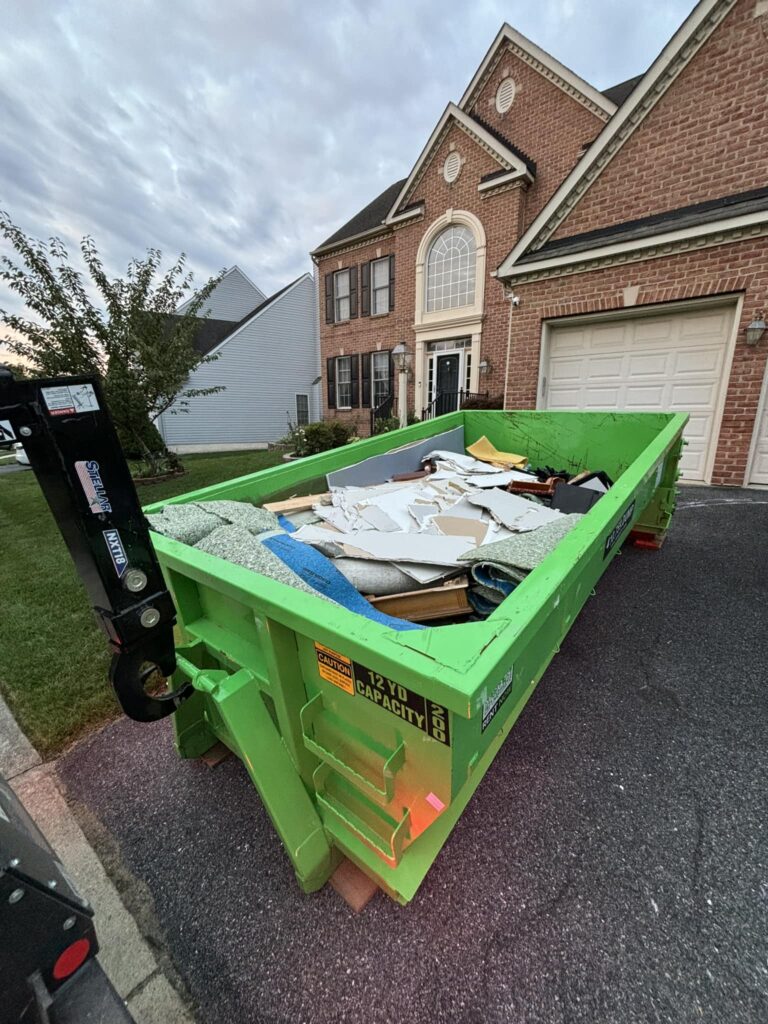
Many people don’t realize that most large roll-off dumpsters have a swinging door at one end.
Instead of lifting heavy items over the high side walls, open the door and walk the items inside.
This significantly reduces the risk of shoulder and back injuries. Once the bottom layer is filled, you
can close and secure the door to continue filling from the top.
Pro Tip: Always ensure the ground is level before opening the door, as a heavy door
on an incline can swing unexpectedly and cause injury.
3. Practice Proper Lifting Techniques
Back injuries are the most frequent accidents during dumpster loading. Never rely on your back
muscles to do the heavy lifting.
- Bend at the knees: Keep your back straight and lift with your legs.
- Keep it close: Hold heavy objects close to your body while moving them.
- Team Lift: If an item is bulky or weighs more than 50 lbs, always ask for help or use a dolly.
- Avoid Twisting: Pivot your feet instead of twisting your torso when moving from a pile to the
dumpster.
4. Distribute Weight Evenly
An unbalanced dumpster can be dangerous for the truck driver to pick up and can even cause the
container to tip or shift. Distribute the weight evenly across the floor of the dumpster rather than
piling everything at one end. Place heavier items (like appliances or furniture) at the bottom and lighter debris on top. This
creates a stable base and prevents items from shifting during transport.
5. Watch the “Fill Line”
It is tempting to squeeze every last bit of junk into the bin, but overfilling is a major safety hazard.
Debris protruding from the top can fall off during transport, endangering other drivers.
- Most dumpsters have a “Max Fill” line painted on the inside.
- Never stack items higher than the side walls.
- If the load is overfull, the haulage company may refuse to pick it up until you remove the
excess.
6. Know What’s Forbidden
Loading prohibited items isn’t just a matter of fines; it’s a safety issue. Items like car batteries,
propane tanks, and wet paint can cause fires, chemical burns, or explosions within the dumpster.
Always check with your local DumpStor location for a list of prohibited materials before you start loading.
Give your nearest DumpStor location at call or conveniently book online to schedule your next dumpster rental with “Your Trusted Dumpster Rental Partner”®